

What Leadership Has Been Missing
Relational Intelligence shapes what happens between people when leadership gets real.
A founder can build a strong business, hire capable people, clarify roles, put systems in place—and still find that the team isn't working together quite the way they expected. People hesitate to say what they really think. Decisions still find their way back to the founder. Disagreement gets softened or avoided. Ownership is uneven. Under pressure, people retreat into their own areas rather than working through what is difficult together.
The visible problem may look like communication. Accountability. Execution. Or simply a team that isn't stepping up.
But sometimes, something else is happening.
The relational conditions between people are shaping what the team is able to do together.
That is the territory of Relational Intelligence.
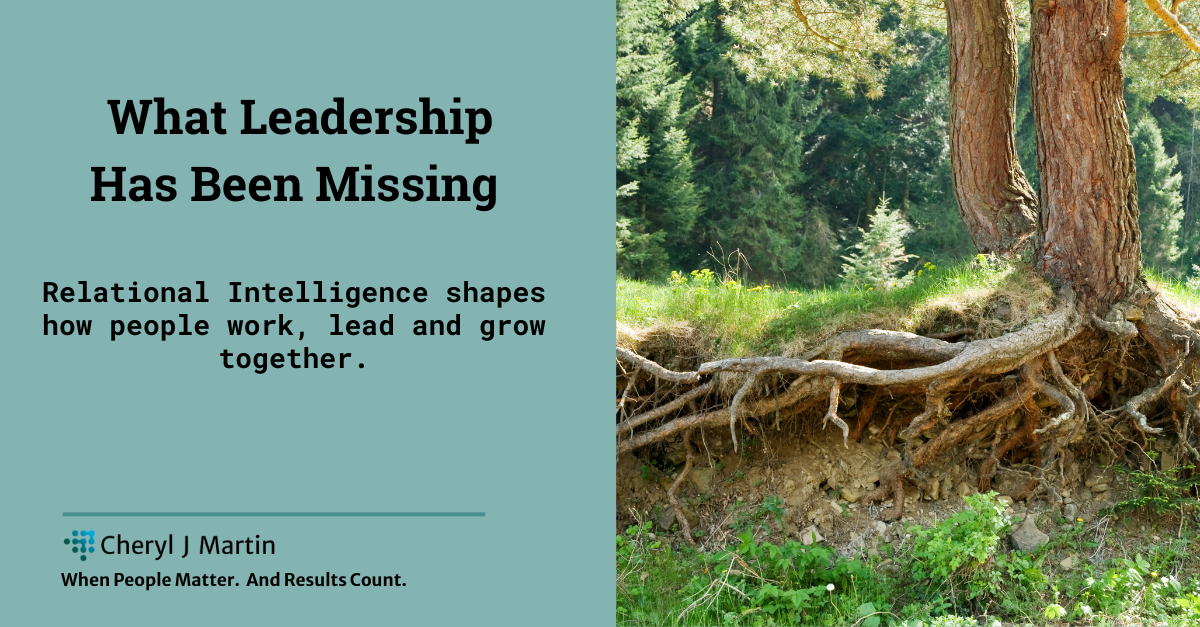
What is Relational Intelligence?
Relational Intelligence is the ability to understand what's happening between people and lead in ways that strengthen the conditions they need to contribute fully. It helps leaders notice what isn't always being said. Recognize when apparent agreement isn't real alignment. Stay curious when tension rises. Create enough trust for people to surface concerns early rather than after they've become problems.
The original premise still holds: process matters. Structure matters. Clear roles and decision rights matter.
And even when those things are sound, the quality of the relationships people are working inside can profoundly influence whether they succeed.
A team can have a good strategy, clear goals and capable people—and still struggle.
This is why I think Relational Intelligence has been one of the less visible dimensions of leadership. We have spent enormous energy developing what leaders know and what they do. Much less attention has been given to their capacity to understand and shape what happens between people.
Four relational conditions I keep coming back to
In my work, I return to four interconnected dynamics: Trust, Belonging, Recognition and Collective Resilience.
Trust
Trust creates the foundation for candor, speed and real alignment. When people trust one another, they can disagree without assuming bad intent. Problems surface earlier. Decisions hold. Accountability becomes more natural because people aren't spending energy protecting themselves or second-guessing motives.
Trust makes honesty usable.
Belonging
Belonging influences whether people contribute fully or begin to self-protect. People need to know that their perspective, questions and contribution have a place—even when they see something differently. This isn't about everyone agreeing. It's about creating enough relational safety for people to bring what they actually see into the room.
Belonging makes contribution safer.
Recognition
Recognition helps turn contribution into ownership. People want to know that more than the final result is seen—their thinking, effort, strengths, growth and contribution matter too. When people experience that kind of recognition, they are more likely to take initiative, invest themselves in the work and contribute beyond simple compliance.
Recognition makes contribution meaningful.
Collective Resilience
Collective Resilience is a team's ability to stay steady and move through pressure together. It shows up in what happens after a setback, a difficult decision, conflict or an intense period of work. Can the team recover, repair, adapt and remain connected? Or does pressure leave people blaming, withdrawing or carrying the strain alone?
Collective resilience helps a team move through pressure together.
These four dynamics aren't separate boxes. Trust, belonging and recognition strengthen a team's capacity for collective resilience. Together, they shape the relational environment in which people are being asked to lead and work.
What this can look like in a growing company
Relational Intelligence becomes especially important as a founder's business grows beyond what they can personally hold.
You want people to think for themselves. Make decisions. Raise concerns. Challenge assumptions. Take genuine ownership.
Whether people actually do those things depends on more than whether you've told them they can. They are also learning from what happens when they do.
What happens when someone disagrees with you?
What happens when someone makes a decision differently than you would?
What happens after a mistake?
Whose voice tends to carry the most weight?
Does bad news travel quickly—or slowly?
Can people challenge one another and remain connected?
Those everyday interactions teach a team what is actually safe, expected and valued. Over time, patterns form.
And those patterns can travel
This is one reason I especially value working with founders while their teams are still relatively small. An early leadership team has an unusual opportunity to shape intentionally how people will work, lead and relate as the company grows. How you make decisions together. How you disagree. How responsibility is shared. How mistakes are handled. How contribution is recognized. How you respond when pressure rises.
Those ways of operating can become the beginnings of:
“How we do things here.”
New people enter them. New leaders observe them. Some patterns are reinforced, some evolve, and others may eventually need to be deliberately changed.
The way your team works together now can shape how your company works together later.
This is culture forming in real time.
And it gives Relational Intelligence significance well beyond whether today's team gets along. You are creating relational conditions that may influence the organization you're becoming.
Why this matters now
Growth brings more people, more complexity and more pressure. And pressure has a way of testing relationships.
Hard conversations can get postponed. People protect their own areas. Founders step back into decisions they had hoped others would own. Quiet gets mistaken for agreement. Frustration gets interpreted as a performance problem before anyone has looked at what may be happening between people.
Some of those problems will have structural, capability or business causes. Some will be relational.
Understanding what's actually happening comes first.
Relational Intelligence gives us another place to look—at the human dynamics influencing whether people can speak honestly, take ownership, contribute fully and stay connected when things get difficult. Because a growing business ultimately depends on more than having the right people in the right roles. It also depends on what those people are able to create together.